
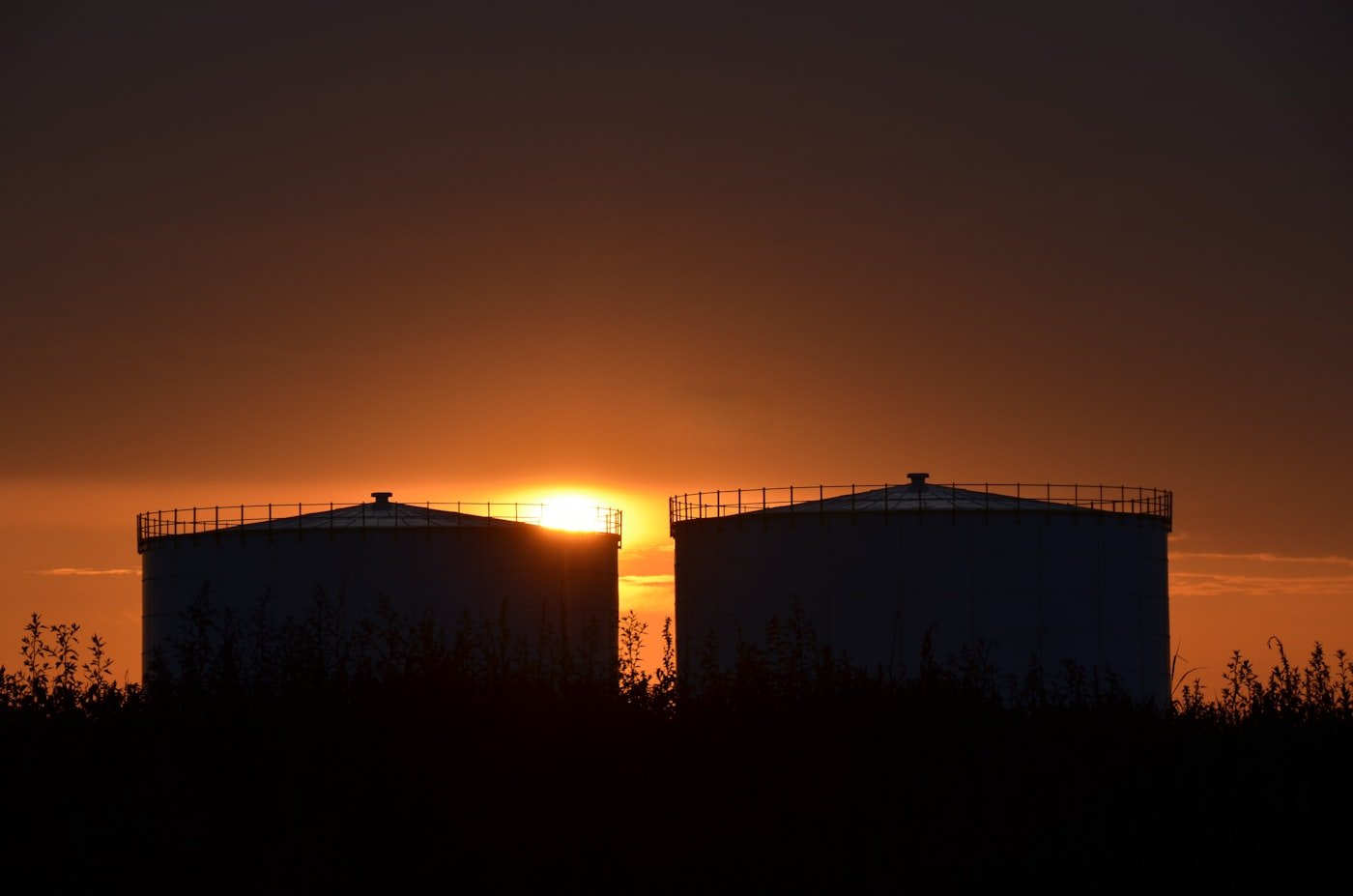
Standby plants rarely fail because of the engine. They fail because of the fuel — how much is stored, how it is kept, and how quickly it can be replenished.
When a standby plant lets a facility down during a long outage, the cause is usually not mechanical. It is fuel: not enough stored, degraded in the tank, or impossible to replenish at the moment everyone else in the region is trying to do the same thing.
Storage is an assumption about deliveries
A tank sized for eight hours of full-load running is really a statement that a tanker will arrive within eight hours. During a regional outage — the exact scenario standby power exists for — delivery intervals stretch. Roads are congested, suppliers prioritize contracts, and a facility without a priority-supply agreement waits. Storage sizing should start from a realistic worst-case delivery interval, not from a round number of running hours.
Stored diesel is not stable
Diesel degrades in storage. Water accumulates, microbial growth follows, and the first heavy demand pulls the accumulated sediment straight into the filters — typically within the first hours of the first real emergency. A polishing regime, tank inspection, and periodic sampling are cheap compared to a plant that stops on filter blockage while the grid is down.
Design the logistics with the plant
Fuel logistics belongs in the project scope, not in the operations manual as an afterthought. That means delivery access planned for the actual tanker size, fill points that can be reached safely in bad weather, level monitoring the operator actually watches, supply contracts with defined response times, and a documented run-hour and replenishment plan tested at least once against a realistic drill.
The generator is the visible part of backup power. The fuel system is the part that decides whether it keeps running on day two.